Quick Answer: Kratom capsules are pre-measured gelatin or vegetarian shells filled with powdered leaves from Mitragyna speciosa, a tropical tree native to Southeast Asia. Each capsule typically contains 0.5–1.0 grams of kratom powder, offering a tasteless, pre-dosed alternative to loose powder.
Kratom capsules are one of the most popular ways to consume Mitragyna speciosa — a plant that has been used in traditional Southeast Asian medicine for centuries, particularly in Thailand, Indonesia, Malaysia, and Papua New Guinea. Farmers and laborers historically chewed raw leaves for stamina and pain relief. Today, Western consumers overwhelmingly prefer the capsule format because it eliminates the plant’s intensely bitter taste and removes the need to measure powder manually.
Inside each capsule is the same finely ground kratom leaf powder you would find in a loose bag — the difference is purely one of delivery format. The capsule shell, most commonly made of gelatin or hydroxypropyl methylcellulose (HPMC) for vegetarian options, dissolves in stomach acid within minutes after swallowing.
Standard capsule fill weights:
| Capsule Size | Approximate Fill Weight |
| Size 0 | ~500 mg (0.5 g) |
| Size 00 | ~700–750 mg (0.7–0.75 g) |
| Size 000 (“triple zero”) | ~900 mg–1.0 g |
Most commercial kratom capsules use size 00, making the typical serving size 2–4 capsules (roughly 1.4–3.0 grams) for someone with low-to-moderate tolerance.
How Kratom Capsules Work — The Science of Alkaloids
The effects of any kratom capsule trace back to over 40 naturally occurring alkaloids present in Mitragyna speciosa leaves. Two alkaloids drive most of the pharmacological activity:
Mitragynine
Mitragynine is the most abundant alkaloid in kratom leaves, typically comprising 60–70% of the total alkaloid content by weight. A 2024 study published in Current Opinion in Plant Biology confirmed that mitragynine acts as a partial agonist at μ-opioid receptors and shows structural similarities to classical opioids, yet with a distinct indole alkaloid framework. This structural difference is why researchers have been exploring mitragynine’s pharmacological profile as a potential opioid alternative, though no FDA-approved medications containing mitragynine currently exist.
At lower doses, mitragynine is associated with stimulant-like effects: increased alertness, reduced fatigue, and mild mood elevation. This is thought to occur via adrenergic and serotonergic receptor activity rather than opioid pathways.
7-Hydroxymitragynine (7-OH)
7-Hydroxymitragynine is present in smaller concentrations in natural kratom leaf — typically less than 2% of total alkaloids — but is far more potent as a μ-opioid receptor agonist than mitragynine. A 2026 review published in Translational Psychiatry confirmed that kratom alkaloids engage μ-opioid, adrenergic, and serotonergic receptors, as well as modulate dopaminergic and glutamatergic systems.
Important distinction for 2026: Regulatory agencies are now drawing a clear line between natural-leaf kratom products (which contain low, naturally occurring levels of 7-OH) and products artificially concentrated with synthetic 7-OH. The FDA has specifically stated it is “not focused on natural kratom leaf products” — its scrutiny is directed at high-potency synthetic 7-OH extracts. Standard kratom capsules filled with plain leaf powder fall into the natural product category.
Other Biologically Active Alkaloids
Beyond the two dominant compounds, Mitragyna speciosa contains speciociliatine, speciogynine, paynantheine, and corynantheidine. A 2025 comprehensive review in Kuwait Journal of Science analyzed 150 papers on kratom alkaloids and noted that some minor alkaloids may exhibit stronger pharmacological activity than mitragynine or 7-OH in certain contexts — an area of active research interest.
Onset and Duration in Capsule Form
Unlike loose powder dissolved in liquid, capsules must be digested before alkaloids absorb into the bloodstream. Users typically report:
- Onset: 30–60 minutes after ingestion (vs. 15–30 minutes for powder)
- Peak effects: 1–2 hours post-ingestion
- Duration: 3–6 hours depending on strain, dose, and individual metabolism
The delayed onset is a common reason first-time users accidentally take too much — they assume the capsules aren’t working and add more, then experience the full dose simultaneously. Starting low and waiting at least 60 minutes before considering a second dose is critical.
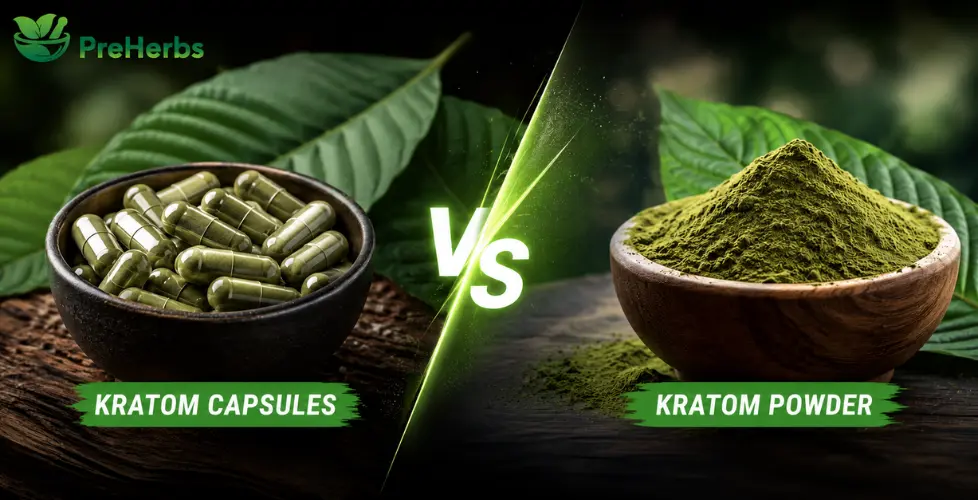
Kratom Capsules vs. Kratom Powder: Key Differences
| Feature | Kratom Capsules | Kratom Powder |
| Taste | None (capsule masks bitterness) | Intensely bitter and earthy |
| Dosing accuracy | High — pre-measured per capsule | Variable (scale needed for accuracy) |
| Onset speed | Slower (30–60 min) | Faster (15–30 min) |
| Portability | Excellent — discrete, no mess | Requires container, spoon, scale |
| Cost per gram | Higher (10–30% premium) | Lower cost per gram |
| Stomach tolerability | Often better (no taste trigger) | May cause nausea from taste/texture |
| Versatility | Limited to oral use | Can brew tea, mix into drinks |
| Shelf life | Slightly shorter (moisture risk) | Longer when stored properly |
Bottom line: Capsules are the better choice for most daily users who prioritize convenience and consistency. Powder is preferable when cost per gram matters most or when faster onset is needed.
Kratom Strains Available in Capsule Form
One of the most confusing aspects of shopping for kratom capsules is navigating strain names and vein colors. Here is a practical breakdown.
Understanding Vein Colors
The “vein color” — red, green, white, yellow, or gold — refers to the color of the central vein visible on mature kratom leaves at the time of harvest. This is significant because different stages of leaf maturity correspond to different alkaloid ratios, which in turn shape the user experience.
Red Vein Kratom Capsules
- Vein color at harvest: Red (mature leaves)
- General alkaloid profile: Higher 7-OH relative to young leaves; higher mitragynine content
- User-reported experience: Relaxation, comfort, sedation at higher doses, mood support
- Commonly chosen when: Evening use, unwinding, seeking physical comfort
Red vein strains are the most popular category of kratom by sales volume. The two most recognized red strains are:
- Red Bali: One of the most widely available kratom strains globally. Named after the Indonesian island of Bali, though much of it is actually sourced from other parts of Indonesia. Known for a balanced, mellow experience.
- Red Maeng Da: “Maeng Da” loosely translates to “pimp grade” in Thai — a colloquial phrase for superior quality. Red Maeng Da capsules are often described as more potent than standard red strains. Browse Red Vein Kratom Capsules at Great Kratom Shop.
- Red Borneo: Sourced from the island of Borneo (shared by Indonesia, Malaysia, and Brunei), this strain is popular for its reportedly long-lasting effects.
- Red Sumatra: From the Indonesian island of Sumatra, often described as intensely relaxing.
Green Vein Kratom Capsules
- Vein color at harvest: Green (mid-maturity leaves)
- General alkaloid profile: Intermediate alkaloid balance
- User-reported experience: Moderate energy, mental clarity, mild mood lift — without strong sedation or stimulation
- Commonly chosen when: Daytime use, social situations, focus tasks
Green vein strains occupy a middle ground between white and red. They are popular with users seeking cognitive support without unwanted sedation or jitteriness.
- Green Malay: Sourced from Malaysia, this strain is associated with sustained energy and long-lasting effects. Explore Green Malay Kratom Capsules.
- Green Maeng Da: A potent green strain with stimulating properties, well-regarded for focus and productivity. See Green Maeng Da Capsules.
- Green Borneo: A balanced option often associated with mental clarity and physical ease.
- Green Hulu: Named after the Hulu Kapuas region of Borneo, considered rarer and often described as smooth and well-balanced. Browse Green Hulu Kratom.
- Green Vein Thai: A classic Southeast Asian strain with stimulating properties. Explore Green Vein Thai Kratom.
White Vein Kratom Capsules
- Vein color at harvest: White (young, immature leaves)
- General alkaloid profile: Higher mitragynine to 7-OH ratio; lower sedative alkaloids
- User-reported experience: Stimulating, energizing, mood-brightening, focus-enhancing
- Commonly chosen when: Morning use, physical activity, mental tasks requiring sustained attention
White vein strains are the most stimulating kratom category. They are often compared to a strong coffee but without the anxiety spike some people experience with high caffeine intake.
- White Maeng Da: Considered among the most potent white strains. See White Maeng Da Kratom.
- White Borneo: A popular daily-use white strain with a reportedly clean, focused energy profile. Browse White Borneo Kratom.
- White Thai: Traditionally grown in Thailand, known for uplifting mental effects. See White Thai Kratom.
- White Bali: A more balanced white strain — energizing but less intense than White Maeng Da. Check Astral Kratom White Bali Capsules at Great Kratom Shop.
Yellow Vein Kratom Capsules
What it is: Not a distinct vein color from the plant itself. Yellow kratom is typically produced through an extended drying or fermentation process that modifies the alkaloid profile of white or green leaves.
User-reported experience: Mellow, smooth, gentle mood lift — often described as “somewhere between green and gold”
Commonly chosen when: Mild daily use, new users easing in, afternoons
Yellow Indo is one of the most recognized offerings in this category. Browse Yellow Indo Kratom for options.
Gold Kratom Capsules
What it is: Like yellow, “Gold” is a post-harvest processing designation rather than a leaf vein color. Gold kratom typically involves a longer drying or blending process. Some vendors describe Gold as a blend of red and white strains; others achieve it through unique fermentation methods.
User-reported experience: Balanced, well-rounded — users often report elements of both relaxation and mild clarity
Commonly chosen when: Seeking a versatile all-day option without committing to purely stimulating or sedating effects
Browse Gold Vein Kratom at Great Kratom Shop.
Trainwreck Kratom Capsules
Trainwreck is a multi-strain blend — typically a proprietary mix of anywhere from 5 to 11 different kratom strains — designed to combine the properties of multiple vein colors. Users who respond well to Trainwreck often describe it as a “full-spectrum” experience. It is not a single plant strain. Browse Trainwreck Kratom Capsules.
Strain Comparison
| Strain | Vein Color | Primary Character | Best For | Onset |
| Maeng Da | Red/Green/White | High potency | Experienced users | Moderate |
| Bali | Red | Mellow, balanced | Relaxation, beginners | Moderate |
| Borneo | Red/Green/White | Smooth, versatile | Daily use | Moderate |
| Malay (Green) | Green | Long-lasting clarity | Focus, social energy | Moderate |
| Thai | Green/White | Stimulating | Energy, productivity | Moderate |
| Sumatra | Red | Deep relaxation | Evening, unwinding | Moderate–slow |
| Indo | Super/Yellow | Gentle, smooth | Mild daily use | Slow |
| Hulu Kapuas | Green/Red | Balanced, rare | Versatile use | Moderate |
| Horn | Various | Unique alkaloid profile | Experienced users | Moderate |
| Trainwreck | Blend | Full-spectrum | Variety seekers | Variable |
How to Choose the Right Kratom Capsule
Choosing a kratom capsule involves three layers of decision-making: strain selection, product quality, and vendor verification. Here is a practical framework.
Step 1: Define Your Goal
Before browsing products, identify what outcome you are looking for:
- Sustained energy and focus → Green Malay, Green Maeng Da, White Borneo
- Relaxation and comfort → Red Bali, Red Borneo, Red Sumatra
- Balanced, all-day use → Gold Kratom, Yellow Indo, Green Maeng Da
- Maximum potency → Red/White Maeng Da, Horn strains
- First-time user exploring → Green Malay, Red Bali (gentler profiles)
Step 2: Evaluate Product Quality
Look for these markers in any kratom capsule product:
- Third-party lab testing (COA): Every reputable vendor publishes certificates of analysis from independent laboratories verifying alkaloid content and confirming the absence of heavy metals, salmonella, E. coli, and adulterants.
- AKA GMP Certification: The American Kratom Association (AKA) runs a Good Manufacturing Practices (GMP) program. Vendors who pass independent audits earn GMP Qualified Vendor status — a meaningful signal of quality control.
- Capsule type disclosure: Reputable brands specify whether shells are gelatin or vegetarian HPMC.
- Fill weight transparency: The label should state how many milligrams of kratom powder are in each capsule.
- No inflated alkaloid claims: Natural kratom leaf products do not legally contain synthetic or artificially elevated 7-OH. Any product making claims of extreme potency via synthetic alkaloids should be approached with serious caution given current FDA and state regulatory trends.
Step 3: Choose a Trustworthy Vendor
Great Kratom Shop offers a wide-ranging catalog of kratom capsules from established brands including Astral Kratom, Choice Botanicals, Blue Magic Kratom, Club 13, and Affinity Kratom, among others. The shop’s lab analysis spreadsheet is publicly accessible, providing transparency on tested products.
Dosage Guide: How Many Kratom Capsules Should You Take?
Important: No standardized clinical dosage has been established by any regulatory agency. The following reflects commonly reported practices in the kratom community and is not a medical recommendation. Start at the lowest end and always consult a healthcare provider.
Kratom dose-response relationships are non-linear. This means effects do not simply scale up with dose. At low doses, mitragynine produces predominantly stimulant-like effects. At higher doses, sedative and opioid-like effects become more prominent. Crossing into high-dose territory significantly increases the risk of side effects.
General Kratom Capsule Dosage Framework
| Dose Range (in grams) | Approximate Capsules (0.5g each) | Reported Experience |
| 1–2 g | 2–4 capsules | Very mild, energizing, suitable for new users |
| 2–4 g | 4–8 capsules | Moderate effects; stimulation (green/white) or mild relaxation (red) |
| 4–6 g | 8–12 capsules | Stronger sedation/relaxation; analgesic effects more pronounced |
| 6 g+ | 12+ capsules | High-dose territory; significantly increased risk of nausea, dizziness, tolerance |
Dosage Tips
- Start with 1–2 grams on your first session regardless of the strain.
- Wait a full 60 minutes before assessing effects, especially with capsules.
- Do not re-dose within the same 4–6 hour window as a general rule.
- Take on a semi-empty stomach — food can delay onset by an additional 30–60 minutes.
- Avoid daily use where possible. Frequency is the primary driver of tolerance buildup and physical dependence.
- Rotate strains if using regularly. Strain rotation may help slow tolerance development.
Featured Products at Great Kratom Shop
The following four products represent a cross-section of the kratom capsule catalog at Great Kratom Shop. They span different price points, strain types, and user profiles.
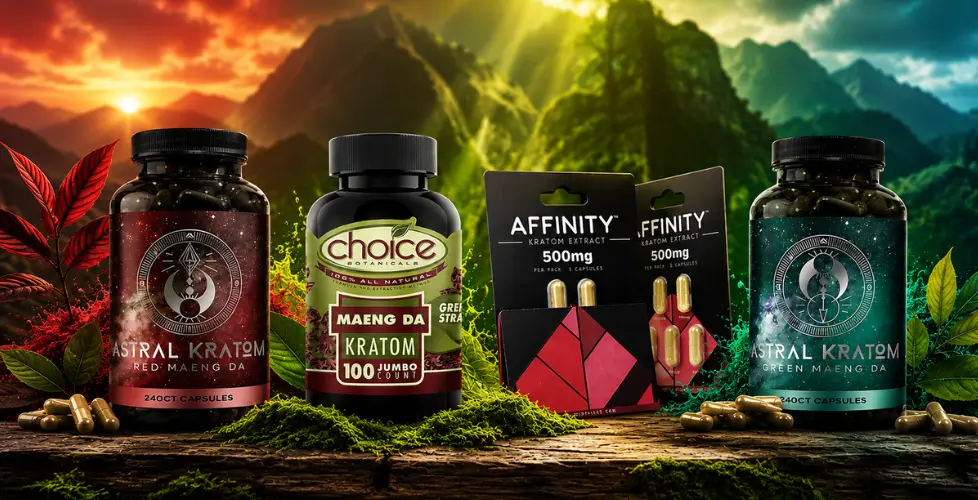
Astral Kratom Green Maeng Da Kratom Capsules (240ct)
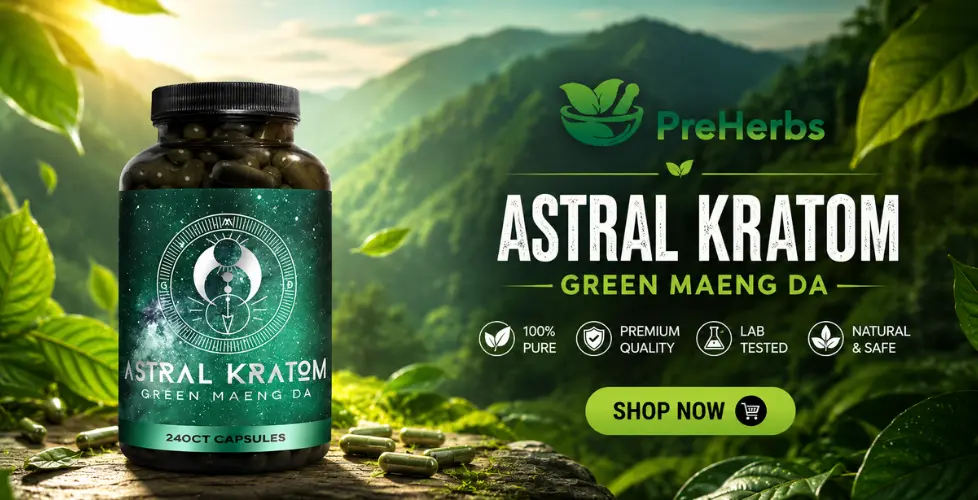
Astral Kratom’s Green Maeng Da is a high-count value package aimed at regular users who want a reliable daily-use green strain without paying premium extract prices. Green Maeng Da is one of the most searched kratom strains globally, valued for its stimulating yet balanced effects. The 240-count bottle offers a substantial supply at an accessible price point.
Best For: Users seeking a daytime stimulating strain for focus and energy. Ideal for those transitioning from powder who want the convenience of capsules.
Key Features:
- High-count bottle for extended supply
- Green Maeng Da — one of the most popular strains
- Pre-measured capsules for consistent dosing
- Value pricing compared to extract alternatives
Astral Kratom Red Maeng Da Kratom Capsules (240ct)
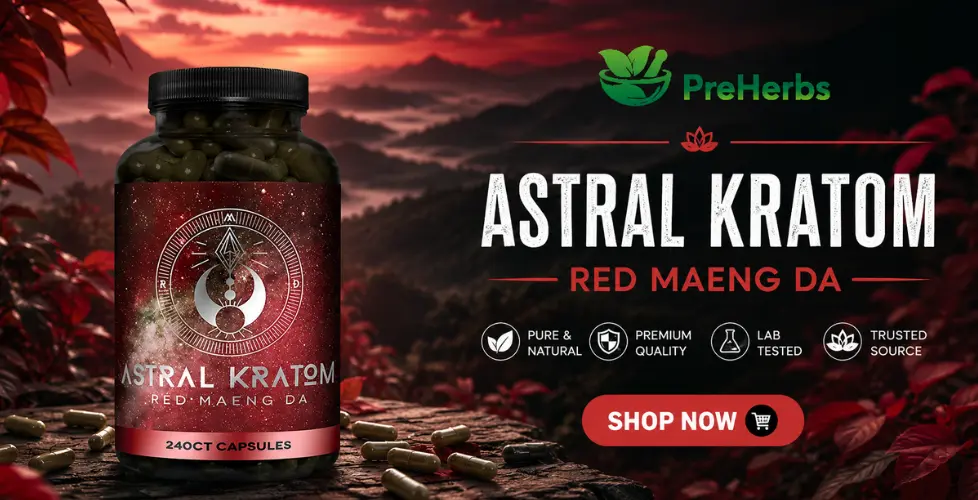
The red counterpart to the product above, this 240-count bottle delivers Red Maeng Da — a strain consistently ranked among the most popular red veins for its reportedly potent and well-rounded character. Red Maeng Da is a go-to for users seeking comfort and relaxation. The bulk count makes it practical for those who use kratom regularly and want a no-hassle supply.
Best For: Evening or end-of-day use. Users seeking relaxation, physical comfort, or a restful wind-down. Also popular among those who have used kratom before and have established tolerance.
Key Features:
- Red Maeng Da — highly rated for potency among red strains
- 240 capsules for extended supply
- Competitive pricing for a high-capsule-count product
Choice Botanicals Green Maeng Da Jumbo Kratom Capsules
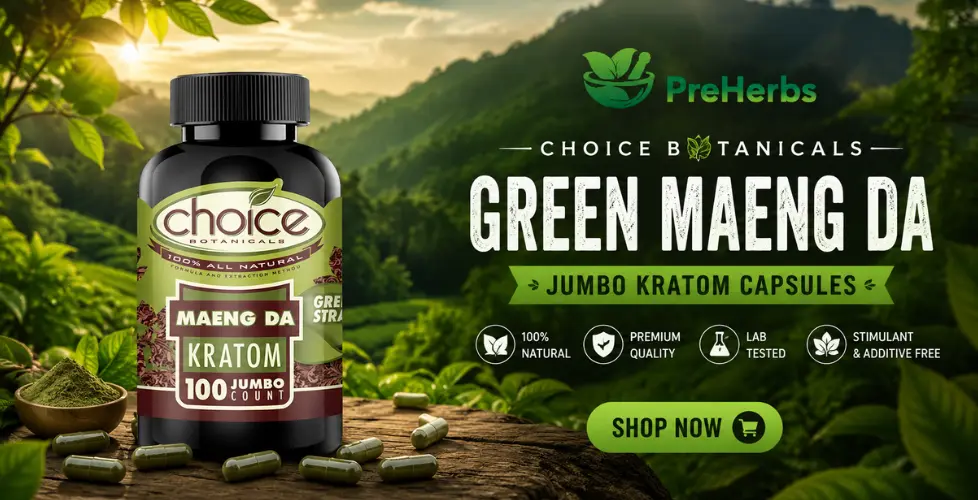
Choice Botanicals is a well-established name in the kratom market, known for using larger-format “Jumbo” capsules that deliver a higher per-capsule dose. This means fewer capsules per serving compared to standard size 00 options — an advantage for users who find swallowing multiple capsules inconvenient.
Best For: Experienced users who want larger per-capsule doses and require fewer capsules per serving. A strong choice for those familiar with Green Maeng Da’s effect profile.
Key Features:
- Larger jumbo capsule format for higher per-capsule kratom content
- Trusted Choice Botanicals brand
- Green Maeng Da strain — well-rounded, stimulating
Affinity Kratom Extract Capsules 500mg
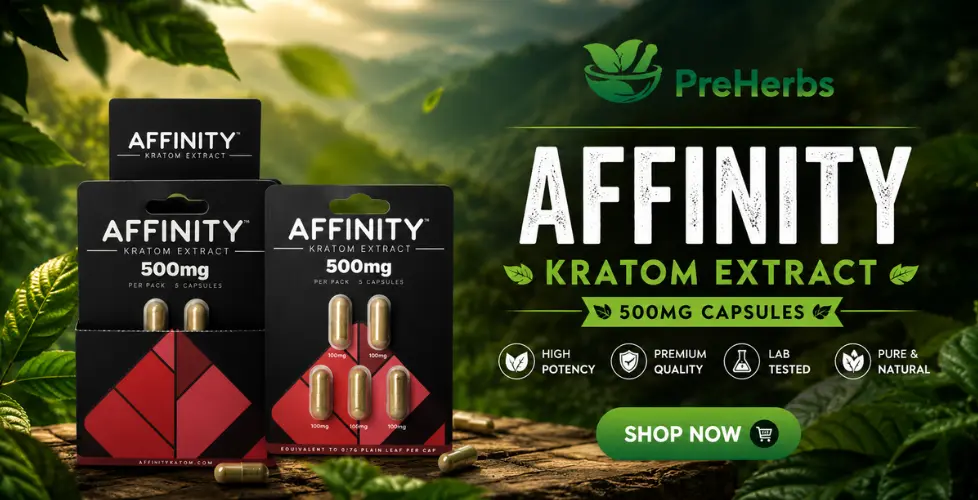
Affinity Kratom Extract Capsules differ from the standard leaf powder options above. These are concentrate capsules — made using an extraction process that increases the alkaloid concentration per capsule compared to plain-leaf products. At 500mg per capsule, users typically need fewer capsules per serving. These are not suitable for new users due to the elevated potency.
Best For: Experienced kratom users familiar with their tolerance who want a more concentrated option. Also suitable for users who dislike swallowing large numbers of standard capsules.
Key Features:
- Kratom extract formulation — higher potency per capsule
- Available in single pack or bulk case (60 capsules)
- 500mg per capsule
- Flexible purchase options from single trial to bulk
Note: Extract capsules are more potent than standard leaf capsules. Use with greater caution regarding dose. Not recommended for new users.
Product Comparison Table
| Product | Strain | Type | Count | Price | Best For |
| Astral Kratom Green Maeng Da | Green Maeng Da | Leaf powder | 240ct | $15.99 | Daily energy, focus |
| Astral Kratom Red Maeng Da | Red Maeng Da | Leaf powder | 240ct | $15.99 | Relaxation, evening use |
| Choice Botanicals Green Maeng Da Jumbo | Green Maeng Da | Leaf powder (jumbo) | Varies | $35.99 | Experienced, less swallowing |
| Affinity Kratom Extract 500mg | Extract blend | Kratom extract | 5ct / 60ct | $19.99–$169.99 | Experienced, high potency |
Quality Markers — What Separates Good Capsules from Bad
The kratom capsule market is diverse — and not uniformly regulated. Here is how to identify credible products.
Green flags (indicators of quality):
- Publicly available Certificate of Analysis (COA) from an accredited third-party lab
- Lab results test for: mitragynine %, heavy metals (lead, arsenic, mercury, cadmium), microbial contamination (salmonella, E. coli), and adulterants
- AKA GMP Qualified Vendor status
- Clear labeling of fill weight per capsule, total capsule count, and batch number
- No exaggerated therapeutic claims (“cures pain,” “treats anxiety”)
- Visible FDA disclaimer on packaging
Red flags (potential quality concerns):
- No third-party lab testing or outdated COA
- Artificially high claims about 7-OH concentration or synthetic alkaloid content
- Unlabeled capsule fill weight
- No batch number or expiration date
- Claims to “treat” or “cure” any medical condition
Benefits Reported by Users (and What Research Shows)
It is important to distinguish between what peer-reviewed science has documented and what users report anecdotally. Both are relevant — but they carry different levels of evidentiary weight.
What Users Commonly Report
Based on surveys and community data, kratom capsule users most frequently report:
- Increased energy and reduced fatigue (especially green and white vein strains)
- Mild mood elevation and reduced anxiety feelings
- Relief from physical discomfort
- Improved focus and mental clarity
- Assistance during opioid withdrawal (this is a high-risk use case and should always involve medical supervision)
A 2025 PubMed study from the University of Colorado noted that kratom consumers increasingly report using the plant for self-treatment of mood ailments, low energy, chronic pain, and opioid withdrawal.
What Research Currently Shows
A 2025 review of kratom’s neuropharmacology in Progress in Neuro-Psychopharmacology & Biological Psychiatry (Green et al., Midwestern University) confirmed that kratom produces complex stimulant and opioid-like effects when ingested.
A January 2025 comprehensive review in Kuwait Journal of Science analyzed 150 studies and concluded that mitragynine and 7-hydroxymitragynine demonstrate analgesic, anti-inflammatory, and potential opioid-withdrawal management properties — while calling for more rigorous clinical trials.
A 2026 review in Translational Psychiatry confirmed that kratom alkaloids engage μ-opioid, adrenergic, and serotonergic receptors, modulate dopaminergic and glutamatergic systems, and exert anti-inflammatory and analgesic effects.
Important caveat: The scientific literature is still largely preclinical (animal models and in vitro studies). Human clinical trials on kratom are limited in number and scope. No kratom-derived medication is currently FDA-approved. The benefits described above should not be taken as confirmed medical fact.
Risks, Side Effects, and Who Should Avoid Kratom
Kratom is not risk-free. Informed use requires understanding both common and serious potential adverse effects.
Common Side Effects
- Nausea and vomiting (especially at higher doses or on an empty stomach)
- Constipation
- Dizziness or lightheadedness
- Dry mouth
- Sweating
- Headache
- Loss of appetite
Serious Risks
Physical dependence: Regular kratom use — especially daily use — can lead to physical dependence. Withdrawal symptoms reported upon cessation include muscle aches, irritability, insomnia, runny nose, and anxiety. These symptoms parallel opioid withdrawal in milder form.
Hepatotoxicity: Case reports in the medical literature have linked kratom use to liver injury in a subset of users. A 2024 critical review in ScienceDirect (Food and Chemical Toxicology) identified hepatotoxicity as a documented adverse health effect, though the incidence is considered low relative to reported use.
Drug interactions: Kratom alkaloids are metabolized by CYP3A4 and CYP2D6 enzymes. This creates the potential for clinically significant interactions with medications that share these pathways — including antidepressants, antifungals, benzodiazepines, and opioid pain medications.
Seizure risk: Case reports have linked kratom use to seizures, particularly in individuals with pre-existing neurological conditions or those combining kratom with other substances.
Who Should Avoid Kratom Capsules
- Pregnant or breastfeeding individuals
- Anyone under age 21 (most regulatory frameworks require this minimum age)
- Individuals with liver disease or hepatic conditions
- People taking prescription medications — especially opioids, benzodiazepines, antidepressants, or anticoagulants — without physician guidance
- Individuals with a history of substance use disorder (the opioid receptor activity of kratom carries genuine dependency risk)
- People with cardiovascular disease or high blood pressure
- Anyone in a state, city, or county where kratom is legally prohibited
Note: Always consult a licensed healthcare provider before beginning kratom use, particularly if you have any existing health condition or take medications.
Legal Status of Kratom Capsules in 2026
Kratom’s legal landscape has shifted significantly in 2025–2026. Staying current is essential before purchasing.
Federal Level (United States)
Kratom is not listed on the federal Controlled Substances Act. The DEA classifies it as a “Drug and Chemical of Concern.” The FDA has taken enforcement action against high-potency synthetic 7-OH products specifically, while publicly stating it is “not focused on natural kratom leaf products.” However, the FDA has not approved kratom as a dietary supplement or drug.
State Level (As of July 2026)
States with full kratom bans (kratom capsules are illegal to possess or purchase):
- Alabama
- Arkansas
- Indiana
- Louisiana
- Vermont
- Wisconsin
- Connecticut (ban effective March 25, 2026)
Note: Tennessee enacted a ban effective July 1, 2026 per the most current reporting. Verify your state’s current status before purchasing.
States using KCPA regulatory frameworks (legal with regulations — age restrictions, testing requirements, labeling standards): Arizona, Colorado, Florida, Georgia, Illinois, Kentucky, Maryland, Minnesota, Mississippi, Nebraska, Nevada, New York, Oklahoma, Oregon, Rhode Island (effective April 1, 2026), South Carolina, South Dakota, Tennessee was previously here, Texas, Utah, Virginia, West Virginia, and others.
Great Kratom Shop does not ship to: Alabama, Arkansas, Indiana, Louisiana, Rhode Island (though this has been updated — verify current policy), Vermont, Wisconsin, and several municipalities including San Diego CA, Oceanside CA, Sarasota County FL, Jerseyville IL, Ontario OR, and Union County MS.
Verify your local laws before purchasing. Laws change rapidly. Check your state legislature’s official website or the American Kratom Association’s regulatory tracker for current status.
Myths vs. Facts About Kratom Capsules
| Myth | Fact |
| “Kratom capsules are just like taking an opioid pill.” | Kratom alkaloids interact with opioid receptors, but their pharmacological profile is distinct from classical opioids. However, dependency risk is real and should not be dismissed. |
| “Extract capsules are always better than leaf capsules.” | Higher potency is not the same as better for every user. Extract capsules increase both the intensity of effects and the risk of side effects and tolerance buildup. |
| “Natural means safe — kratom capsules have no risks.” | Natural origin does not eliminate risk. Kratom carries documented risks including dependence, liver effects in some users, and serious drug interactions. |
| “All kratom strains are basically the same.” | Alkaloid profiles genuinely vary between strains and processing methods. Red, green, and white vein leaves have measurable differences. That said, marketing names like “Maeng Da” are not standardized and do not guarantee a specific alkaloid content. |
| “You can take kratom every day without issue.” | Daily use is associated with faster tolerance buildup and significantly higher dependence risk. Most experienced users and harm-reduction advocates recommend scheduled breaks. |
| “Kratom is FDA-approved.” | Kratom is not FDA-approved for any use. No kratom-derived medication has cleared clinical trials and regulatory review. |
| “Higher dose = better results.” | Kratom shows a biphasic dose-response pattern. At higher doses, sedation and side effects dominate, and the risk of nausea, dizziness, and vomiting increases substantially. |
Frequently Asked Questions
Q1: What are kratom capsules used for?
Commonly used for energy, mood, focus, and physical comfort relief. No uses are FDA-approved or clinically established.
Q2: How many kratom capsules should a beginner take?
Start with 2 capsules (~1g) and wait a full 60 minutes before considering more. Capsules absorb slower than powder — never re-dose early.
Q3: What is the difference between Red, Green, and White vein kratom capsules?
Red = relaxation, White = stimulating energy, Green = balanced daytime use. Each reflects the maturity of the leaf at harvest.
Q4: What is a kratom extract capsule vs. a regular kratom capsule?
Regular capsules contain plain leaf powder; extract capsules contain concentrated alkaloids and are far more potent per milligram. Extracts are not suitable for beginners and carry higher dependence risk.
Q5: Can kratom capsules interact with medications?
Yes — kratom is metabolized via CYP3A4/CYP2D6, the same liver pathways as opioids, antidepressants, and benzodiazepines. Consult a pharmacist or physician before combining with any prescription.
Q6: Can kratom capsules cause addiction?
Yes — physical dependence is a documented risk, with withdrawal resembling mild opioid symptoms (aches, insomnia, irritability). Daily use significantly raises that risk.
Q7: Do kratom capsules show up on a standard drug test?
Standard 5-panel tests do not screen for kratom and it won’t trigger opioid false positives. Specialized kratom-specific tests do exist and are used by some employers and clinics.
Q8: Are kratom capsules legal in the United States?
Federally legal, but banned in Alabama, Arkansas, Indiana, Louisiana, Vermont, Wisconsin, Connecticut, and Tennessee as of July 2026. Around 22 states regulate it under the Kratom Consumer Protection Act — always verify local laws.
Q9: How should kratom capsules be stored to maintain potency?
Store in an airtight container away from heat, light, and moisture — the main causes of alkaloid degradation. Properly stored capsules last one to three years; HPMC veggie caps handle moisture better than gelatin.
Q10: Where can I buy quality-tested kratom capsules online?
Great Kratom Shop offers a wide selection of lab-tested kratom capsules with publicly available COAs. Their buying guide helps you evaluate quality and avoid low-grade products.
Key Takeaways
- Kratom capsules contain powdered Mitragyna speciosa leaves pre-loaded into gelatin or vegetarian shells — typically 0.5–1.0 grams per capsule.
- Active alkaloids mitragynine and 7-hydroxymitragynine interact with opioid, adrenergic, and serotonergic receptors. Effects are dose-dependent and biphasic.
- Capsule onset is slower (30–60 min) than powder due to capsule digestion — a key point to prevent accidental overdosing.
- Strain selection matters: Red = relaxation; White = stimulation; Green = balance; Yellow/Gold = processed/mellow.
- Extract capsules are significantly more potent than leaf powder capsules and are not appropriate for beginners.
- Quality indicators include third-party COAs, AKA GMP certification, transparent labeling, and no exaggerated therapeutic claims.
- Risks are real: dependence, drug interactions, hepatotoxicity in some users, and serious adverse events are documented.
- Legal status varies significantly — kratom is banned in multiple U.S. states and additional bans were enacted in 2025–2026. Always verify before purchasing.
- No kratom product is FDA-approved. Kratom is not a dietary supplement under federal law and has not passed clinical trials for any medical indication.
Final Thoughts: Are Kratom Capsules Right for You?
Kratom capsules offer one of the most practical and consistent ways to incorporate Mitragyna speciosa into your routine — no measuring, no bitter taste, no mess. Whether you’re drawn to the sustained focus of a Green Maeng Da, the evening wind-down of a Red Bali, or the versatility of a Gold blend, there is a capsule format built for your goal.
But convenience should never replace caution.
The science on kratom is still developing. The benefits users report — energy, comfort, mood support — are real to millions of people. So are the risks: physical dependence, drug interactions, and the importance of dosing carefully, especially with slower-absorbing capsule forms.
The difference between a positive and a negative kratom experience almost always comes down to three things:
- Starting low — 1–2 grams, regardless of what others report
- Choosing quality — third-party tested, AKA GMP-certified vendors only
- Staying informed — about your state’s laws, your medications, and your own response
Disclaimer: This article is for educational purposes only. Kratom (Mitragyna speciosa) has not been evaluated by the FDA for treating, diagnosing, or preventing any disease. Kratom may carry risks including dependency and adverse reactions. Always consult a qualified healthcare provider before use. Kratom is illegal in several U.S. states — verify your local laws before purchasing.